Porcupine Tree's In Absentia: What the 2002 Album Means
Steven Wilson tuned his guitar down a full tone for Porcupine Tree's first major-label album, and the heavier sound that widened their audience later boxed them in.
Track by track (12 tracks)
Steven Wilson filled In Absentia with serial killers, child molesters and wife beaters, and what he kept asking about them was what happens in youth or adolescence to leave a person unable to empathize. The title is the answer he gave. “It’s an absence in the soul.”
He tuned his guitar a full tone down. This was a man who had once written metal off as music for adolescents, and here he was, with Lava’s money behind Porcupine Tree for the first time, writing riffs while he listened to Meshuggah and Opeth. The record sold about three times what any earlier Porcupine Tree album had.
Later, the same sound boxed the band in.
Two Andys and a leap of faith
Their manager, Andy Leff, had worked with Hanson, and he got Porcupine Tree in front of Andy Karp at Lava in New York. Karp understood the music and was ready to pay for it, which for a major label was a leap of faith. Louder put the whole campaign at roughly $400,000 in all. Wilson agrees only if tour support is counted.
Chris Maitland never made it to the sessions. The drummer hadn’t been concentrating properly, and he had shoved Wilson against a wall. Richard Barbieri phoned Gavin Harrison, a session man who had seen the band at Shepherd’s Bush Empire about nine months before, and Karp had suggested Will Calhoun of Living Colour as a backup. Harrison came in and joined the band by stealth. North America got the result, the band’s seventh studio album, on September 24, 2002, and Europe waited until January.
Recording at Avatar, a few months after 9/11
Porcupine Tree got to New York in early 2002, a few months after the attacks, and set up at Avatar Studios, the old Power Station. Harrison had never really drummed on anything this heavy, and he went through it fast. “They booked 14 days for me to do the drums. I did it in five.”
Paul Northfield, the engineer, came to the sessions from Rush’s Vapor Trails and called Avatar’s drum room a classic, and drums and bass went down there on its Neve 8068 console while guitars and keyboards went into the SSL 9000 room. In about three and a half weeks the band cut 16 songs: 12 for the album, two for the European release, one to give away on the website. Dave Gregory, formerly of XTC, arranged strings for Air Lyndhurst in London. John Wesley added guitar and backing vocals at Red Room Recorders in Tampa, from tapes Wilson sent him. Tim Palmer and Mark O’Donoughue then mixed at Larrabee North in North Hollywood, one track a day for 16 days. Apart from the strings, the record went through American rooms. Wilson thought “American rock records sound better than any other rock records in the world.”
Meshuggah, Opeth and a lower tuning
Wilson read Lords of Chaos and went digging. The book took him from Burzum and Morbid Angel through the doom bands, and he came out the far side with two names he ranked above the rest of the scene. “The big influences when I was writing the record were Meshuggah and Opeth, no doubt about that.” He was working with Opeth by then, and Mikael Åkerfeldt came to see Wilson as his idol.
The lower tuning gave him “Blackest Eyes,” “The Creator Has a Mastertape” and “Strip the Soul.” “Trains” and “The Sound of Muzak” are older Porcupine Tree, and “Heartattack in a Layby” and the closer have barely any guitar on them at all. In the Guardian, Dave Simpson praised the fragile songs and complained of too many heavy instrumental sections.
What the songs are about
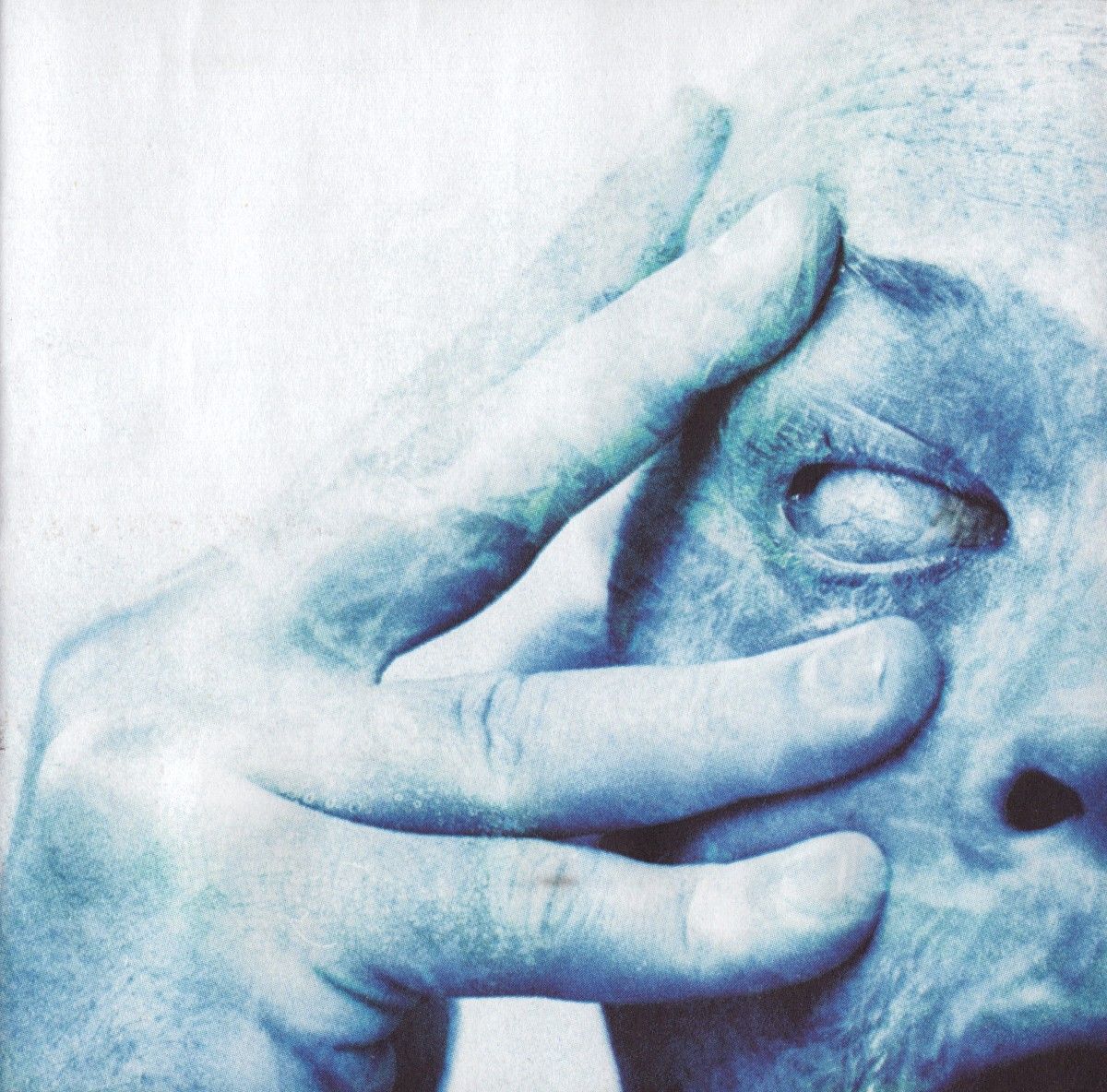
Wilson admitted the serial-killer thread was there, but he wouldn’t explain every song. Jeff Fitzgerald of Aural Innovations traced it through the running order and still stopped short of calling the record a concept album, and Lasse Hoile, a Danish artist, gave the sleeve a self-portrait with no eyes in the face. “The Sound of Muzak” is a critique of the music business. The closer is about a breakup.
Blackest Eyes
The opener is 4:24 of the first down-tuned riff, with John Wesley on extra guitar and backing vocals. Fitzgerald heard youthful innocence gone awry in it. Lava put it on a pre-release radio sampler, then released it as a single in April 2003, and major US rock stations added it.
Trains
Lava’s sampler carried a shortened “Trains” as well. On the album the song runs 5:56, acoustic, and its extended break is Wilson’s banjo with handclapping.
Lips of Ashes
When VOX asked him about “Lips of Ashes,” Wilson said he was going to dodge the question. Simpson heard a gorgeous, childlike fragility in its 4:39 and set it beside the closer.
The Sound of Muzak
Aviv Geffen joins Wesley on backing vocals, the first of the two songs where both guests sing. Wilson called the 4:59 track a critique of the music business he was in, and Barry Walters of Rolling Stone heard him take an enraged guitar solo.
Gravity Eyelids
At 7:57 “Gravity Eyelids” is the longest song on In Absentia, darkly symphonic to Fitzgerald’s ear, with an Opethian heaviness. The 2020 box has its demo on the third disc.
Wedding Nails
The one instrumental runs 6:34, and Fitzgerald credited its power to Harrison’s rhythmic design. Walters heard Harrison, Colin Edwin and Barbieri approach the rhythmic fluidity of jazz across the whole record.
Prodigal
“Prodigal” is the second song with both Geffen and Wesley, 5:33 long. Fitzgerald heard the thread turn to melancholy confusion here.
.3
“.3” is 5:26, and neither guest is on it.
The Creator Has a Mastertape
Back to the lower tuning. “The Creator Has a Mastertape” runs 5:22, the second of the riff songs, and to Fitzgerald it was downright chilling.
Heartattack in a Layby
“Heartattack in a Layby” is the shortest track at 4:16, and the guitar nearly drops out of it. Then “Strip the Soul” brings the riffs back.
Strip the Soul
“Strip the Soul” runs 7:22, and it still got an official video and a short edit for the radio sampler. Fitzgerald read the lyric as illness in a family.
Collapse the Light into Earth
Wilson called the closer a song about a breakup, though what had happened in New York, where the band cut it a few months after the attacks, informed it. Jacques Brel’s “If You Go Away” sits behind it, and there is barely any guitar in its 5:55. “I didn’t want to write about 9/11.”
The breakthrough and the corner
Porcupine Tree had been selling about 2,000 copies an album, and In Absentia sold 45,000. Mikael Åkerfeldt said it opened a whole new audience for the band and helped open one for progressive rock. Wilson still faulted Lava for sending three songs to radio at once.
Late in 2003 Elliot Scheiner remixed the album in 5.1 at the Eyeball, and Wilson said that mix was becoming a benchmark of sorts for surround DVD-Audio. Kscope put the record out again in February 2020 as a 3CD and Blu-ray set, with the 2017 remaster and a 5.1 mix. Disc two adds “Drown With Me,” “Chloroform,” “Futile” and radio edits of “Trains,” “Blackest Eyes” and “Strip the Soul,” and the set also carries over 70 minutes of demos and Hoile’s documentary.
By 2004 Wilson put worldwide sales at about 100,000 and rated In Absentia above Peter Gabriel’s Up. Five years later he called it possibly still the best record Porcupine Tree had made. In some ways, he said, it was also the beginning of the end, and he blamed the breakup on having “painted ourselves into a corner as this prog metal group.”