Superstition: Siouxsie and the Banshees' 1991 Album, Explained
Siouxsie came to blame computers for Superstition, but the sessions behind the Banshees' first US Top 40 hit show a band that still held its ground.
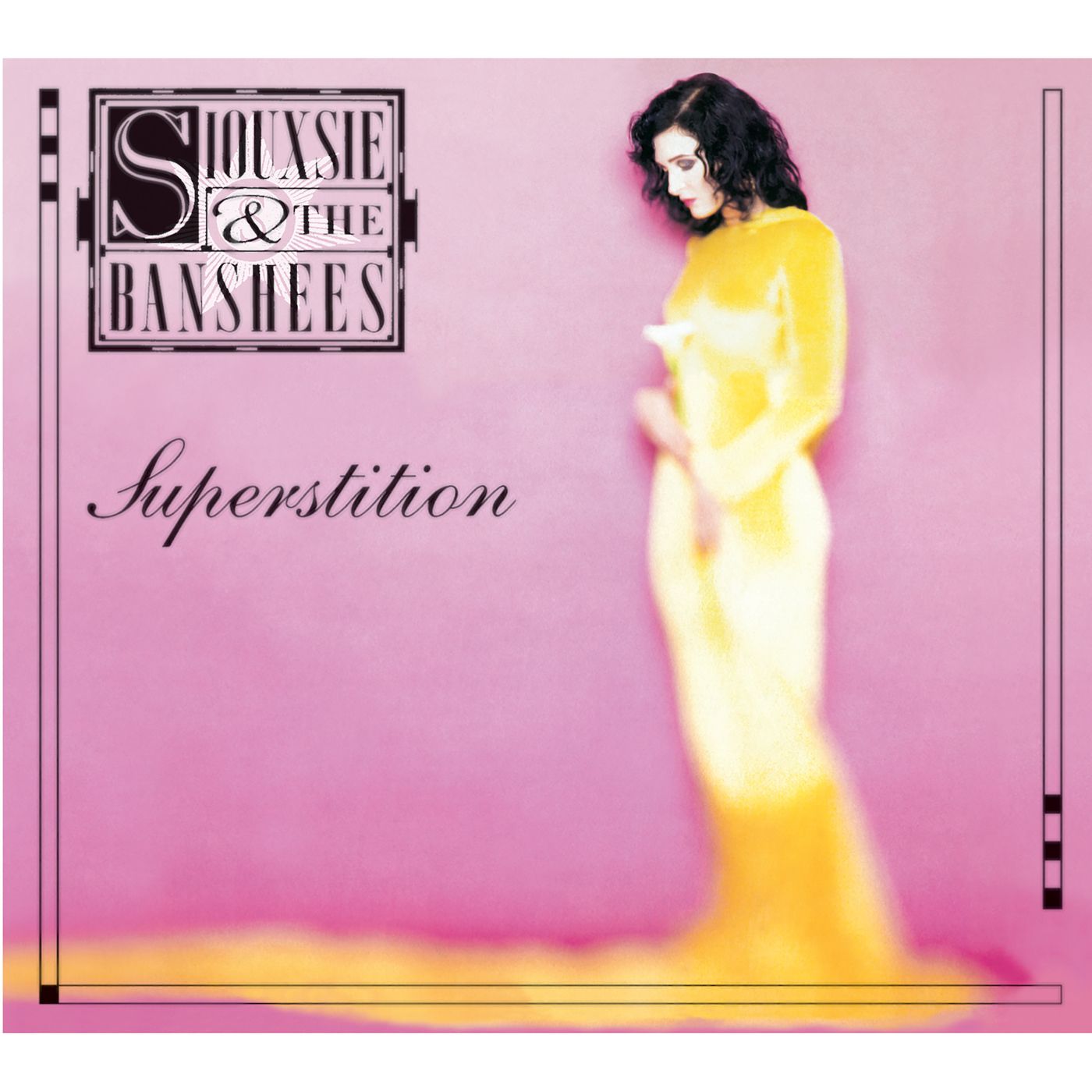
Track by track (11 tracks)
Steven Severin had just started writing on a computer when Siouxsie and the Banshees began work on Superstition, and he came into rehearsals with sequences of music already built. Budgie said Severin and the new producer, Stephen Hague, could pass disks from one computer to the other and get ideas across fast. Some of the songs started that way. The record gave the band their first American Top 40 hit in the summer of 1991, when “Kiss Them for Me” climbed to No. 23 on the Hot 100. Billboard’s Modern Rock chart had it at No. 1 for five weeks.
By October 1992 Rock World was calling Superstition the most successful Banshees album ever. Siouxsie told Gitti Gülden it had been far too accessible and had cost the band a lot of its guts, that it was artistically the least satisfying record they had made, and that making it was where she “really built a strong case against computers.” The stories from those sessions suggest the band gave up less than she remembered.
Songs that arrived on disk
Mike Hedges had been with the Banshees since the early 1980s, and he co-produced Peepshow (1988), whose “Peek-a-Boo” opened Billboard’s Modern Rock chart at No. 1 in its first week. Then he was gone. Hague had been pursuing the band for a few years, with “West End Girls” for the Pet Shop Boys and “True Faith” for New Order on his record, and Siouxsie said they went to him for a discipline they knew they had to find. In January 1992 she still hoped to work with him again.
Computers never took over the writing. All five of them, with Jon Klein on guitar and Martin McCarrick on cello and keyboards, worked songs up in residential rehearsals. “Spiral Twist” was written in a closet under the stairs and ended up as a B-side, and they had so many songs that they toyed with making a double album.
Every track was recorded at RAK and mixed at Mayfair Studios, with Mike “Spike” Drake engineering and Nigel Godrich among the assistants. Severin gets credits for sequencing as well as bass and keyboards on every song, and McCarrick adds hammered dulcimer to his cello. Talvin Singh, then unknown, guested on tabla and tavil.
Where the band dug in
Severin’s lyric for “The Ghost in You” goes back to Tiananmen Square, and Hague wanted the reference cut. He “tried to make me drop the reference to Tiannamen Square!” Severin told Deadline. The line stayed. Severin thought a song had to come at events like that from its own angle, or it turned into sloganeering and could come across as exploitative, and what had stuck with him was the news footage of one individual stepping in front of a tank.
Deadline got his reasons for the singles too. “Kiss Them for Me” was picked for Siouxsie’s melody rather than the rhythm of the track. Songs like “Cry” stayed off the list because they were too close to what people expected.
Melody Maker’s Stud Brothers had made the case against her verdict more than a year before she gave it. Their review of “Kiss Them for Me” allowed for its fashionable dance production and still called the single “a nightmarish return to the sinister Banshees landscapes of yore.”
The songs
Siouxsie has seven of the 11 lyric credits, Severin three and Budgie one, and two of the best stories behind them started in a magazine and a dream.
Kiss Them for Me
Mansfield wasn’t a puppet. That was what caught Siouxsie when she read an outrageous Marie Claire article on Mansfield’s arrival, success and tragedy in Tinseltown while she waited her turn in the studio. Siouxsie thought Mansfield would do anything to promote herself, and the lyric follows her from the heart-shaped pool of fame toward the road to New Orleans and the 1967 car crash, with the chorus warning that she may be delayed. Under the title “Let’s Get Smashed,” it once had Budgie rapping on it. The finished track has Singh on tabla, tavil and taal, and Youth mixed the 12-inch versions.
Fear (of the Unknown)
Junior Vasquez sent back 17 remixes when the band ordered them by phone from Amsterdam, and Severin credited one with totally changing the song. Seventeen is also how many floors the lyric wants to jump. The single came out in November 1991, but not in Britain.
Cry
The band kept “Cry” off the singles list for sounding too close to what people expected. Siouxsie’s lyric moves from a bird with broken wings to tiger skins and elephant tusks.
Drifter
In 1992 Siouxsie still liked “Drifter” and “Kiss Them for Me,” though she had otherwise turned against the album.
Little Sister
Severin’s first lyric on the album lets a sister go and calls it a mercy kill.
Shadowtime
Severin wrote the lyrics to “Shadowtime” and said it wasn’t intended as a single, but Polydor put it out as the second one in July 1991, and it peaked at No. 57. He was happy to name his source. “It’s a Roxy Music For Your Pleasure tribute for all you trainspotters out there!”
Silly Thing
The quarrel in Siouxsie’s lyric is a replay of a dumb charade between friends, and there’s an apology near the end.
Got to Get Up
Siouxsie’s pep talk is the shortest track on the album at 3:17, all about shedding your skin and grabbing your destiny instead of crying boo hoo.
Silver Waterfalls
Budgie’s one lyric puts clouds over a dried-up ocean bed and has its singers roaming like ghostly buffalo. Singh’s tabla comes back here.
Softly
Siouxsie traced the album’s longest track, at six minutes, to the rehearsal studio, where McCarrick and Severin played while she part ad-libbed off an idea she had. Severin had dreamed that he met Elvis, and all Elvis said to him was “Softly.” Bits of an “Is Elvis Alive?” tape he owned play through a short wave radio at the start and end of the song. He drew the line there. “The lyrics are nothing to do with Elvis though!”
The Ghost in You
Severin’s last lyric on the album carries the Tiananmen reference Hague wanted cut, and it closes the record.
Lollapalooza, and the turn
Before the album reached the shops, the Banshees signed up for the Lollapalooza tour of 20 American cities with Jane’s Addiction, Living Colour, Ice-T and Nine Inch Nails. “Kiss Them for Me” was at No. 1 on the Modern Rock chart by July. The album never climbed that high. Superstition stopped at No. 65 on the Billboard 200, and in Britain it peaked at No. 25, five places below Peepshow.
Siouxsie told Rock World she thought the next album would be very different, and The Rapture didn’t arrive until 1995. That same October she and Severin went through their singles for Melody Maker. Severin counted “Kiss Them for Me” among the key songs of Lollapalooza, along with Nine Inch Nails’ “Head Like a Hole,” and Siouxsie recalled that it rained at the tour’s last gig, in Seattle.